Fortitudo: Why Rome Defined Courage as Endurance, Not Attack
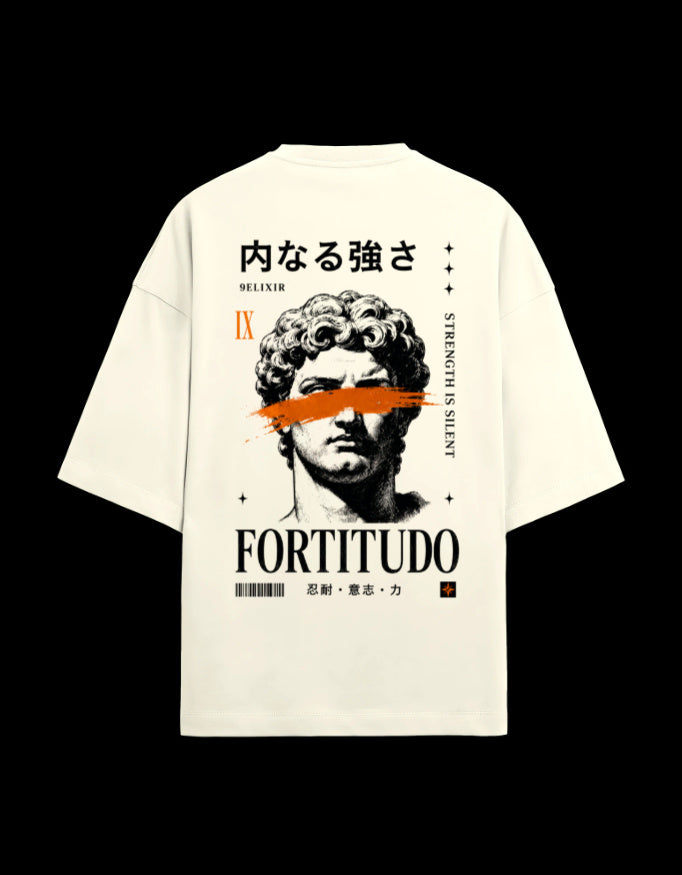
One of four, and the most misread
Fortitudo is the Latin name for courage, and one of the four cardinal virtues that Roman thought inherited from Greece and handed on to medieval Europe: prudentia, iustitia, temperantia, fortitudo. The scheme predates Rome. Plato sets out wisdom, courage, moderation and justice in the Republic. But it was Cicero who fixed the Latin vocabulary, and Cicero who is most often flattened into something he did not say. In De Inventione he defines fortitudo as the considered undertaking of danger and the enduring of hardship. Considered. Enduring. Both halves matter, and the second is the one that gets forgotten.
Rome measured courage by what a man could absorb
Roman military culture ran on disciplina, constantia and patientia: order, steadiness, the capacity to bear. The legion's advantage was rarely individual ferocity. It was a formation that held under pressure while the other line came apart. The stories Rome told about itself point the same direction. Regulus returning to Carthage to keep his word. Mucius Scaevola holding his hand in the flame. These are legends rather than documented history, and Cicero uses them as moral instruction, not record. But what a culture chooses to mythologise is evidence of what it valued, and Rome did not choose the man who charged. It chose the man who did not move.
Cicero was also blunt that courage severed from justice is not a virtue at all. A spirit that hungers for danger and serves only itself he calls audacia, recklessness, and counts it a defect rather than a strength.
The Stoic and the scholastic arrive at the same place
The Stoics treated courage as a form of knowledge: understanding what is genuinely to be feared, what is not, and what is neither. On that reading most fear is an error of estimation. Seneca made the point plainly in his letters, observing that we suffer more often in imagination than in fact. Courage is what is left standing once the estimate is corrected.
Thirteen centuries later Thomas Aquinas reached almost the same conclusion by a different road. In the Summa Theologiae (II-II, q. 123) he asks directly whether the principal act of fortitude is attack or endurance, and answers endurance: sustinere over aggredi. His reasoning is unsentimental. To attack is to move against something you may already overmatch. To endure is to hold while something stronger presses on you, and not break. That is the harder act, and therefore the truer test.
Why strength is silent
The painters understood it. Giotto's Fortitude, on the dado of the Arena Chapel in Padua around 1305, is not caught mid-blow. She stands braced behind a shield, weight set, holding ground. The virtue is depicted as a position rather than a strike.
The Fortitudo tee carries a single phrase across the back: 内なる強さ, uchi naru tsuyosa, inner strength. It is modern Japanese set against a Latin virtue, and we pair them on purpose, because two traditions separated by an ocean and two thousand years converge on the same austere claim. The strength that counts is not the kind that announces itself. It is the part of you that does not give way, and by its nature it makes no noise doing it.
The myth, printed heavy: Fortitudo Oversized Tee.