Memento Mori: A Command to the Living, Not the Dying
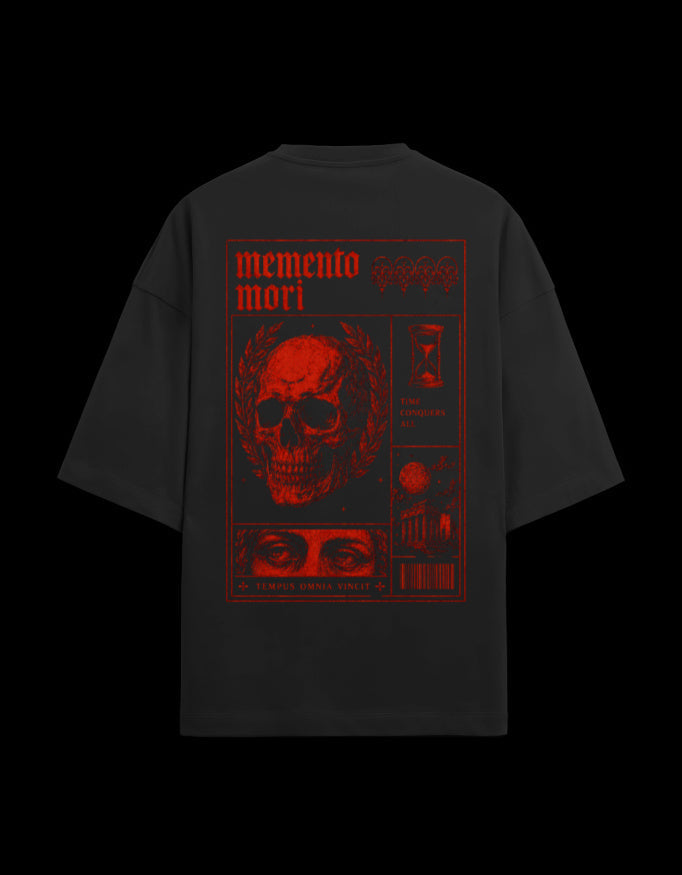
Remember that you must die
Memento mori is Latin for "remember that you must die". Memento is an imperative; mori is the infinitive of morior, to die. The phrase is an order, addressed to someone still breathing. It survives on gravestones, in still lifes and on rings, almost none of it Roman. As a fixed formula it belongs to Christian Europe, not the classical world.
The origin story most often repeated is the Roman triumph. A victorious general processed through the city in a chariot and behind him, so the telling goes, stood a slave holding a crown above his head, murmuring that he was only a man. The earliest source for that whisper is Tertullian, a Christian apologist writing around AD 197, more than two centuries after the triumphs he describes, arguing that Rome knew its rulers were not divine. No Republican or Augustan writer records the scene. Pliny the Elder does note a charm slung beneath the triumphal chariot to turn away envy, so the anxiety about overreach was real. The whispering slave, though, is late, thinly attested and probably apocryphal, and the words Tertullian reports are not memento mori.
The Stoics made it a practice
Long before the skulls, Stoic writers had turned mortality into a daily exercise. Seneca returns to it in the letters to Lucilius: we do not die all at once but by instalments, losing each day as we spend it. His argument in On the Shortness of Life is blunt. We are not handed a short life; we make it short by squandering it. Nero ordered his suicide in AD 65.
Marcus Aurelius kept the same discipline in a private notebook, written in Greek, much of it while campaigning on the Danube frontier in the 170s. He instructs himself to act as a man who might depart at this moment, and to stop behaving as though he had ten thousand years in hand. Neither writer uses the phrase. Both describe the same habit: rehearsing loss in advance so it cannot arrive as a shock.
Skulls, hourglasses and a dance that levels
The imagery hardened after the Black Death of 1347 to 1351, whose toll is estimated variously but plausibly at a third of Europe. Mortality became a subject art could not avoid. The danse macabre put it in pictures: skeletons leading pope, emperor, cardinal and labourer away together, the hierarchy dissolving as the procession moves. The best documented early cycle was painted at Paris's Cemetery of the Holy Innocents around 1424. Hans Holbein the Younger designed some forty woodcuts on it, published at Lyon in 1538.
Dutch painters turned it into still life. Vanitas pictures, concentrated in Leiden in the early seventeenth century, arrange a fixed vocabulary on a table: a skull, an hourglass running down, a snuffed candle, a soap bubble, a wilted flower. The name comes from the Vulgate text of Ecclesiastes, vanitas vanitatum, omnia vanitas, though the Hebrew word behind vanitas is nearer to vapour than to conceit. These were commissioned decorations for comfortable households, not despair.
The instruction is to live
Read as a threat, memento mori is morbid. Read as grammar, it is not. The imperative is aimed at the living, and its object is attention rather than death. The skull works as a scale: the hours are finite, and finite hours have to be chosen between. That is why the phrase kept being carved and worn for six centuries. Not to make death vivid, but to make the day in front of you harder to waste.
The myth, printed heavy: Memento Mori Oversized Tee.